

Pour day, hour by hour.
A stamped concrete pour is a race against the cure. Here is exactly what happens, in order, from first forms to the final seal, and what you need to do before and after.
What to expect.
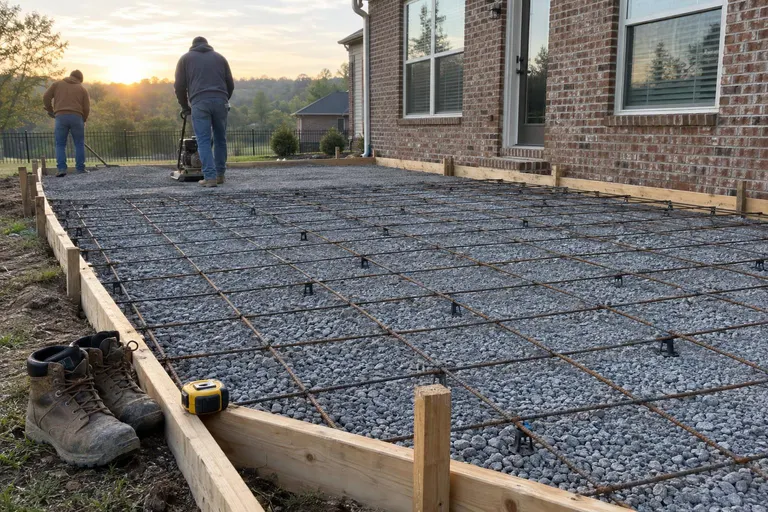
Prep and forms
Utilities are marked, forms are set, the compacted stone base is checked and steel is placed. We confirm the weather window and the truck schedule before anything is mixed.
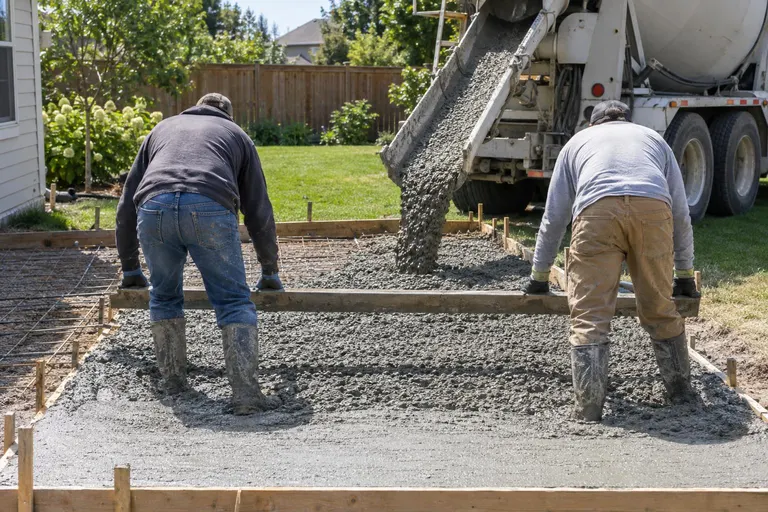
The pour
Colored, air-entrained concrete arrives and is placed and screeded level in a steady rhythm. Everything that follows happens against the clock, so the crew is staged and ready.
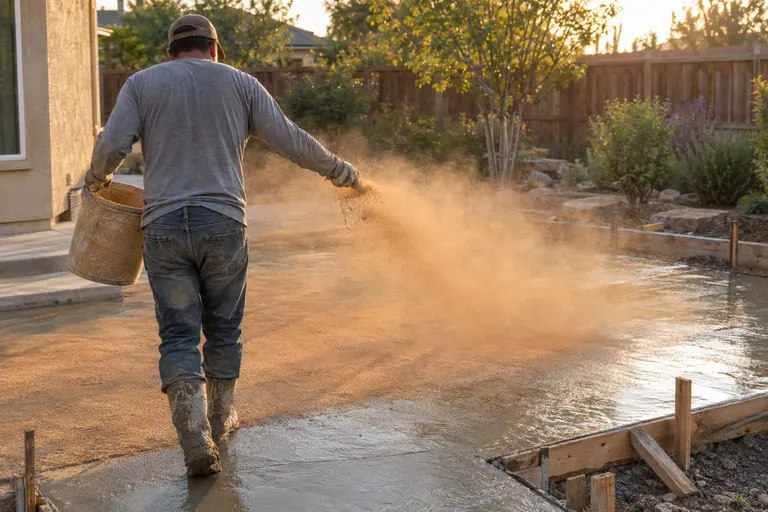
Color and float
Color hardener is broadcast by hand and floated in, building the saturated surface layer. This is where depth of color begins.
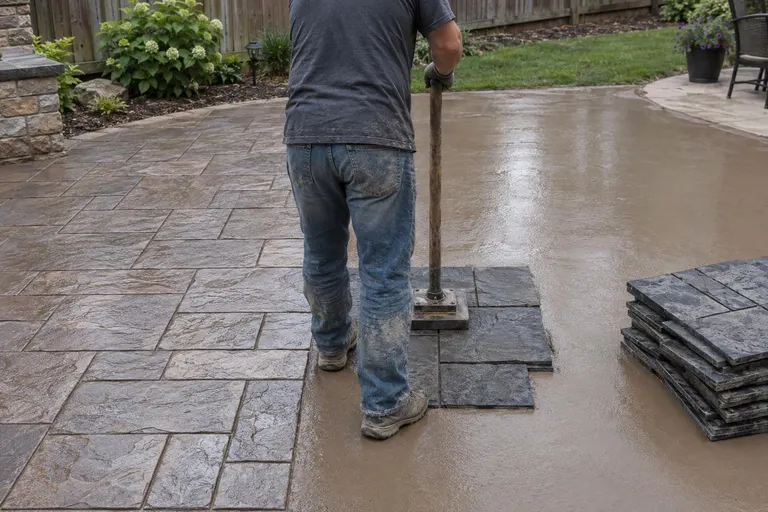
Press the pattern
Antique release goes on, then the rubber stamp mats are set and tamped into the slab one after another, with hand tools for edges and corners.
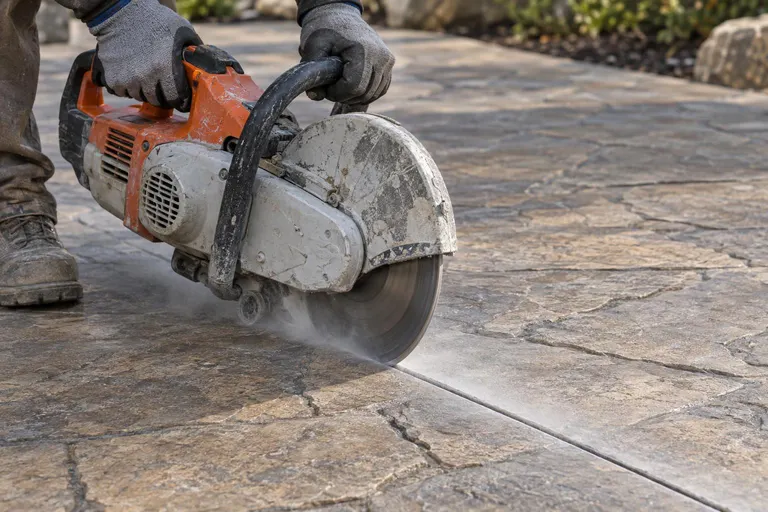
Cut the joints
After the slab firms up, control joints are saw-cut along the pattern lines so any natural movement stays hidden in a grout line.
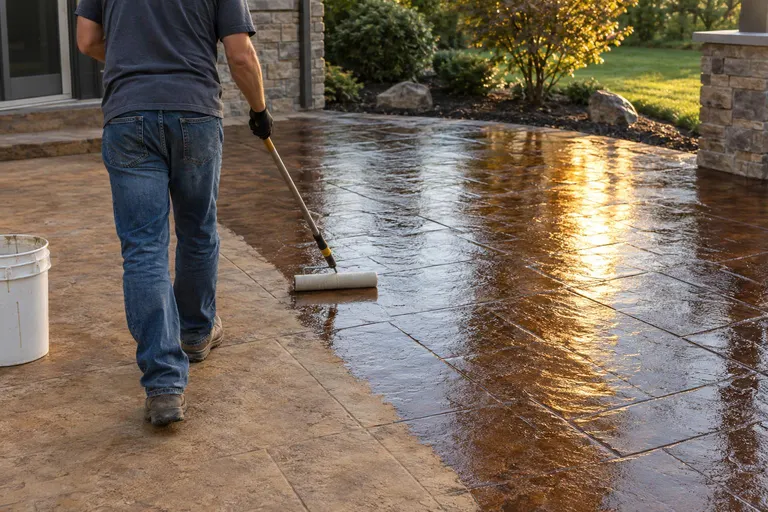
Wash, cure and seal
Excess release is washed away and, once the concrete has cured enough, sealer is applied for color, sheen and protection. Then you move the furniture back.
Typical timing. Weather, temperature and project size set the real schedule, and we walk you through it before we pour.
Your pour day checklist.
- Move vehicles, furniture and planters clear of the work area
- Tell us about irrigation lines, pet access and gate codes
- Plan for truck access: a clear path for the chute or a pump
- Keep kids and pets away from forms and wet concrete
- Be reachable for color or layout questions that morning
- Know that weather decides: we may reschedule for rain or heat
Six promises we keep.
Built from the base up
Compacted stone, reinforcement and air-entrained concrete first. The pretty part sits on top of a slab made to last.
Color you can see first
Cured samples in your own light and a scaled layout before anything is poured.
Hand-finished, never rushed
Release, stamping and tooling done by crews who do this every day, not by whoever is free.
Sealed and explained
The right sealer for sun, traffic and slip resistance, and a clear care guide when we finish.
Straight written pricing
A written estimate that lists thickness, base, colors, pattern, joints and sealer.
Local to your yard
We pour in 28 Middle Tennessee cities, from Nashville courtyards to Williamson County acreage.
Process questions
How long before I can use a new patio or driveway?
Light foot traffic is usually fine within a few days, furniture and vehicles after about a week, and sealing happens once the concrete has cured enough. We give you exact timing for your pour and the weather.
How often does it need to be sealed?
Typically every two to three years, sooner in full sun or heavy traffic. Sealer deepens color, sheds stains and protects against freeze-thaw and de-icers.
Can you pour in winter?
Yes in many conditions. Cold weather needs protection and slower schedules, and we tell you honestly what should be done now and what is best saved for warmer weather.
How do I get started?
Fill in the form on any page or call or text 615-357-7797. We schedule a free visit, bring samples, walk the project with you and send a written estimate.
Will stamped concrete crack?
All concrete can develop hairline cracks. We reduce the risk with base preparation, reinforcement and control joints cut along the pattern lines so any movement hides in a grout line.
Start with the easy part.
Book a free visit. We bring cured samples, measure up and talk through your ideas.